
Active Warrants in Knox County
Warrants in Knox County are issued by the courts and worked by the Sheriff's Office. The District Attorney's Criminal Justice 101 guide explains that a magistrate or judge signs an arrest warrant once enough proof is presented to meet probable cause. Knox County has five magistrates who set bonds, sign arrest warrants, and issue search warrants. A warrant is a court order, so it is created in the court system and then carried out by law enforcement.
There is no public name-search database for active Knox County warrants. The Sheriff's Criminal Warrants Unit enters, maintains, and executes every warrant it receives and investigates where subjects are, but it does not post a searchable warrant list for the public. Because of that, a warrant most often becomes visible to the public only after an arrest, when it shows up on the jail roster. The District Attorney's office works closely with this process.
The District Attorney General homepage covers the office for the Sixth Judicial District and its role in Knox County prosecutions.
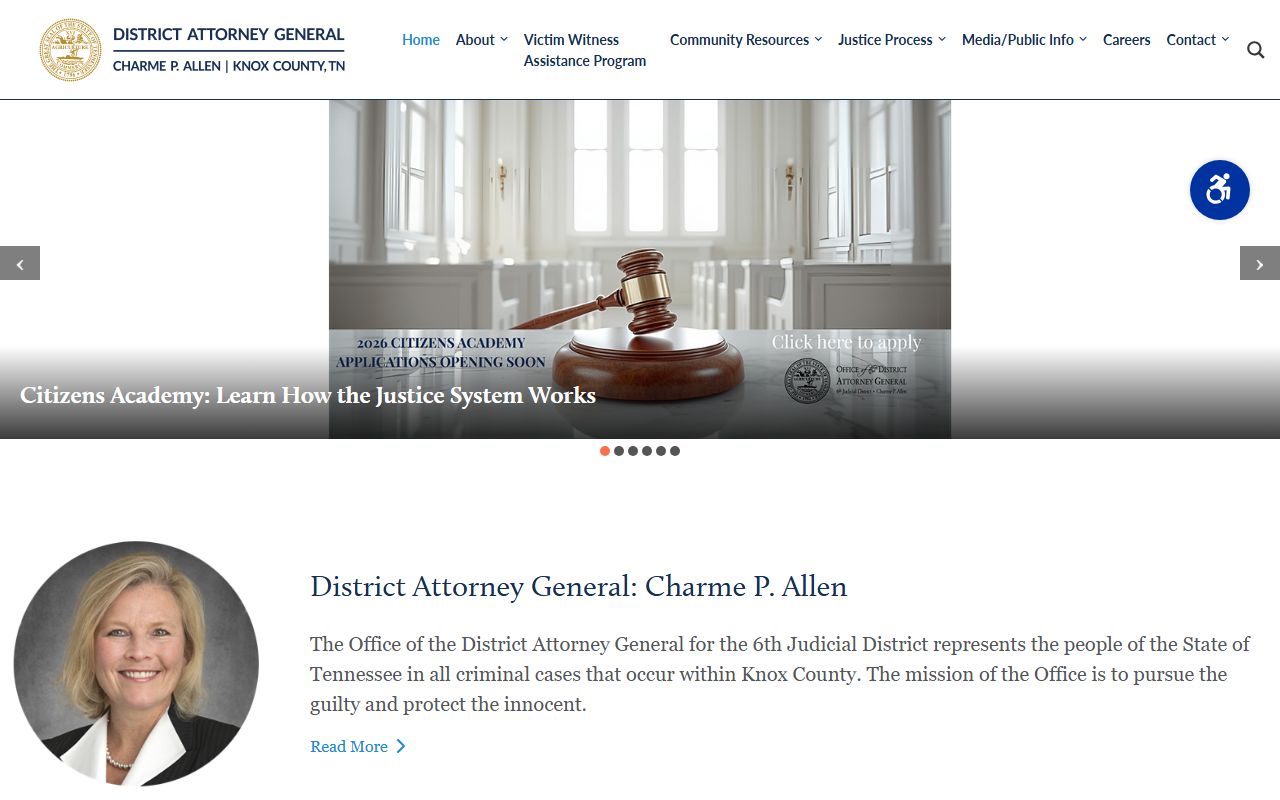
The DA represents the people of Tennessee in all criminal cases in Knox County, working with the courts and the Sheriff on warrants and prosecutions.
Types of Warrants in Knox County
Not all warrants are the same. Some authorize an arrest, some a search, and some issue after a person misses court. Knowing the type helps you understand why a warrant exists and how to resolve it.
- Arrest warrant - a court order charging a person with a crime, signed on probable cause.
- Bench warrant - often issued after a missed court date or for contempt.
- Search warrant - authorizes officers to search a place, signed by a magistrate.
- Capias or failure-to-appear - issued to bring a person to court after a no-show.
For a felony, an officer may arrest on probable cause even when the crime did not happen in the officer's presence. For a misdemeanor an officer did not witness, the officer usually must get an arrest warrant first. This is why some cases begin with a warrant and others with a direct arrest.
How to Check on a Knox County Warrant
Because there is no public warrant database, checking on a warrant takes a few indirect steps. The most reliable route is to ask an attorney or the proper office rather than guess. If a person has been booked, the jail roster may show a warrant as the reason for the hold.
- Contact a defense attorney, who can check court records on your behalf.
- Contact the relevant court clerk for the case tied to the warrant.
- Check the Knox County inmate roster if the person may already be in custody.
The Sheriff's Criminal Warrants Unit also takes anonymous tips and lists a LEIDS contact at 865-215-2442 for warrant information. Avoid unofficial warrant websites, which are not authoritative and may charge for inaccurate data.
It helps to understand why no public list exists. A live warrant list could tip off a subject and let them flee before officers can act, which is the opposite of what the unit is trying to do. The Criminal Warrants Unit uses computer databases to enter, maintain, and execute every warrant it receives, but those systems are for law enforcement, not public browsing. That is why the practical path for a member of the public is a court clerk, an attorney, or the jail roster after an arrest.
Criminal Warrants Unit Contact Form
The Sheriff's Criminal Warrants Unit does not offer a public search portal. Instead, its page provides a contact form for tips and questions. The fields below are what that form collects.
| Field Label | Type | Required | Notes |
|---|---|---|---|
| Name | Text | No | Contact the Criminal Warrants Unit. |
| Phone | Text | No | Callback number. |
| No | Reply address. | ||
| Message | Textarea | No | Tip or question text. |
Note: tips can be left anonymously through the tip line, and the LEIDS phone is the direct contact for warrant matters.
What a Knox County Warrant Shows on the Roster
When a warrant leads to an arrest, the jail roster reflects it. The Document Type field on the roster can read warrant, and the entry then carries the charge, the dates, and the bond. The table shows the fields you may see tied to a warrant on the public roster.
| Field | What It Shows |
|---|---|
| Document Type | Reads warrant when a warrant is the basis for the hold. |
| Charge | The offense tied to the warrant. |
| Booked / Served | When the warrant was served. |
| Bond Type and Amount | The release condition set on the matter. |
| Court Event | The next step, such as a bond hearing. |
What to Do If You Have an Outstanding Warrant
If you think you have a warrant, do not ignore it. An open warrant can lead to an arrest at any time, including a routine traffic stop. The smart first step is to talk to a defense attorney, who can confirm the warrant, explain the charge, and arrange a planned surrender and bond rather than a surprise arrest. Acting early often gives you more control over timing and release.
Important: Talk to a lawyer before you turn yourself in, so you understand the charge, the bond, and your options first.
Tips and Fugitive Task Force
The Criminal Warrants Unit gives priority to violent offenders and those with a significant negative impact on the community. Several of its officers are assigned to the U.S. Marshal's Smoky Mountain Regional Fugitive Task Force and travel across the East Tennessee District tracking violent offenders. The unit works with the Clerk of Court and the State Attorney General's office on warrant matters.
If a subject flees Knox County, the unit begins a return, extradition, and transport process that involves communication, legal paperwork, and officer travel. Citizens can report anonymously through the tip line or by contacting LEIDS at 865-215-2442.
Restricted Knox County Warrant Records
Some warrants are not public at all. A sealed warrant or one tied to an ongoing investigation may be withheld until it is served. Juvenile matters are private under Tennessee law, with few exceptions. Federal warrants are handled by federal agencies, not the Knox County Sheriff, so they will not appear on the county roster. When a warrant is not visible, that does not mean it does not exist.
This is one more reason to use official channels. An unofficial site that claims to list Knox County warrants is not connected to the court or the Sheriff and cannot confirm whether a warrant is active, sealed, or already cleared. A court clerk or an attorney can check the actual case record, which is the only reliable source.
The District Attorney and Warrants
The District Attorney General, Charme P. Allen, leads prosecutions in the Sixth Judicial District. She was first elected in 2014 as the first female Knox County District Attorney General and was re-elected in 2022 to a second eight-year term. Her office takes part in the warrant and prosecution process and coordinates with law enforcement on cases that begin with an arrest or a warrant.
The DA biography page describes the office scale and its prevention initiatives.
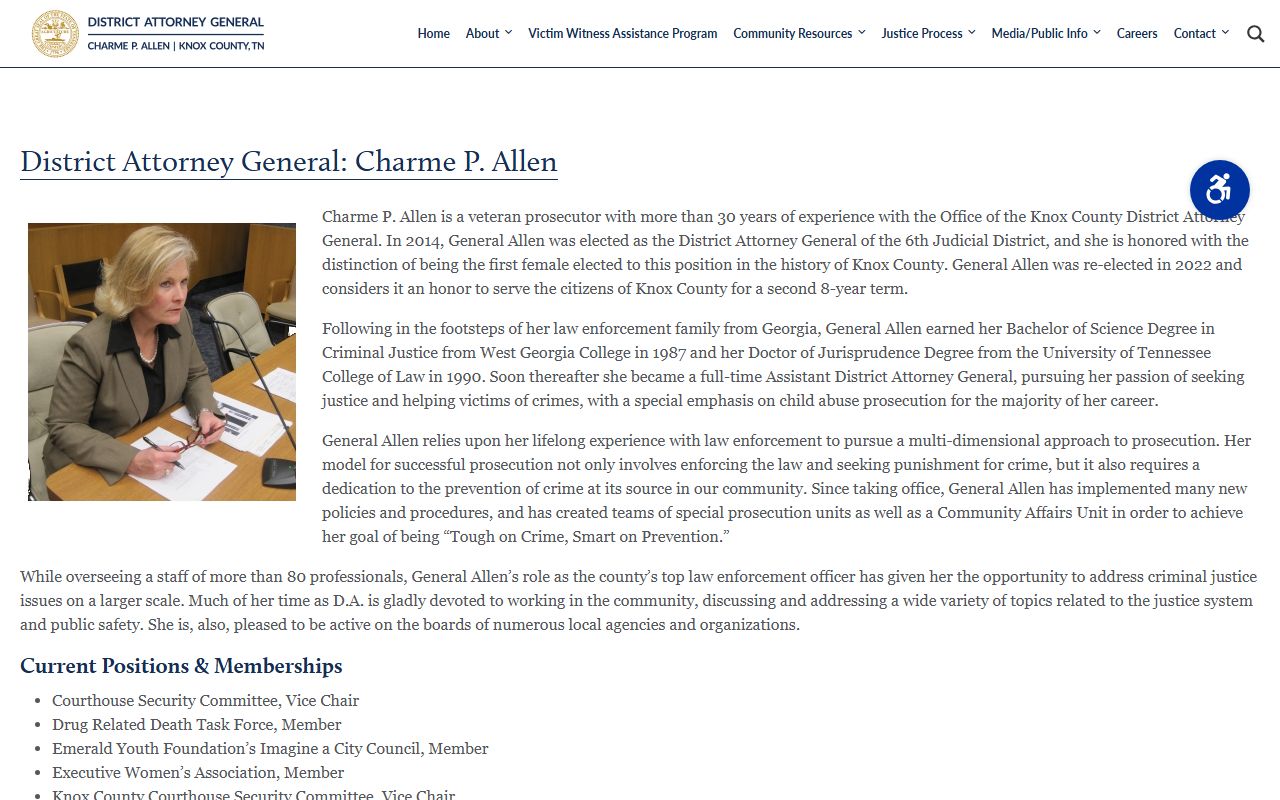
The DA office reports a large staff of assistant district attorneys, investigators, and victim witness coordinators who support these cases.