
What Probate Covers in Knox County
Probate handles what happens to a person's property and affairs after death, plus the care of adults who cannot manage their own affairs. In Knox County, this work is routed through Chancery Court and the Clerk and Master rather than a separately branded probate court. Probate matters include wills, estate administration, guardianships, and conservatorships.
The Clerk and Master is appointed by the chancellors and handles clerical and administrative duties, plus master-in-chancery work under statute and court rule. The Register of Deeds, which records real-property documents, makes the split clear in its own guidance: wills are normally filed in the probate office, not with the Register, except in limited out-of-state or certified-copy situations.
This routing matters because people often look in the wrong place. A surviving family member may expect a will at the Register of Deeds or the County Clerk, but those offices do not open and administer estates. The Chancery side, through the Clerk and Master, is where a will is proved, a personal representative is appointed, and the estate is settled. Guardianship and conservatorship petitions for minors and incapacitated adults are also Chancery matters, which keeps these sensitive family cases in one office rather than scattered across the county.
Probate Terms Defined
Probate filings use a set of legal terms that come up again and again. A short glossary helps you read an estate file.
- Testator
- The person who made the will.
- Executor
- The person named in a will to carry it out.
- Intestate
- Dying without a valid will.
- Guardianship
- Court authority to care for a minor or their affairs.
- Conservatorship
- Court authority to manage an adult's affairs or estate.
How to Search Knox County Probate Records
No free public probate case-search form was found on the official Knox County Chancery pages. That means probate access is mostly office driven, through the Clerk and Master, the Chancery records pages, and the copies and certifications process.
- Decide whether the matter is an estate, will, guardianship, conservatorship, or related Chancery case.
- Review the Chancery filing information and the fee schedule.
- Contact the Clerk and Master to request the file or a certified copy.
The Chancery navigation also lists Resources for Unrepresented Parties, Forms, and Records Information for people handling a matter without a lawyer.
Because there is no public case-search box, the practical path is contact rather than self-service. You can call or visit the Clerk and Master with the name of the deceased or the protected person and an approximate date. The office can confirm whether a file exists and explain how to get copies. Court staff can point you to forms, fees, and records access, but they cannot give legal advice or tell you how to handle an estate, which is a limit Tennessee clerk offices state plainly.
Probate Court in Knox County
Probate and equity matters are heard in Chancery Court at the City-County Building, and the Clerk and Master, J. Scott Griswold, maintains the records. The office sits in Suite 125 downtown.
Chancery Court / Clerk and Master
Clerk and Master: J. Scott Griswold
400 Main Street, Suite 125
Knoxville, TN 37902
865-215-2555
Mon-Fri 8:00 a.m.-4:30 p.m.
Probate Filing Fees
Chancery posted new fees effective January 1, 2026, citing Tenn. Code Ann. section 8-21-401, and it provides the schedule through its official page. Filing fees and court costs must be paid when service is requested, which surprises people who expect to pay later. Because the line-item amounts live in the official PDF, the table points to the current schedule rather than guessing at dollar figures.
| Item | Amount |
|---|---|
| Estate or probate filing | See Jan. 2026 schedule |
| Guardianship or conservatorship filing | See Jan. 2026 schedule |
| Certified copies | Set by the Clerk and Master |
| Court costs | Due when service is requested |
Note: confirm the exact filing amounts on the official Chancery fee schedule before you file, since the figures changed in January 2026.
What Knox County Probate Records Show
A probate file builds over the life of an estate. It can include the will, the petition to probate, an inventory of assets, creditor claims, orders appointing a personal representative, accountings, distributions, and a final closing order. Guardianship and conservatorship files add petitions, medical or capacity information, and court orders setting the scope of authority. Together these documents show who is handling the estate, what it holds, who is owed money, and how the property is distributed.
Reading an estate file in order tells a clear story. The opening petition and the will set the stage. The order appointing an executor or administrator shows who has authority to act. The inventory and accountings track the money, and the creditor notices show who made claims against the estate. The closing order ends the case. For a guardianship or conservatorship, the key document is the order that defines exactly what the guardian or conservator may decide.
Restricted Probate Records
Most probate filings are public, but some material is sensitive. Conservatorship and guardianship files can contain medical or capacity details that a court may protect, and a judge can seal parts of a file. This mirrors how Tennessee handles restricted court records generally, where the Administrative Office of the Courts and the TBI publish official guidance on processes such as expungement.
The state's official expungement guidance shows how certain records can be removed or restricted.
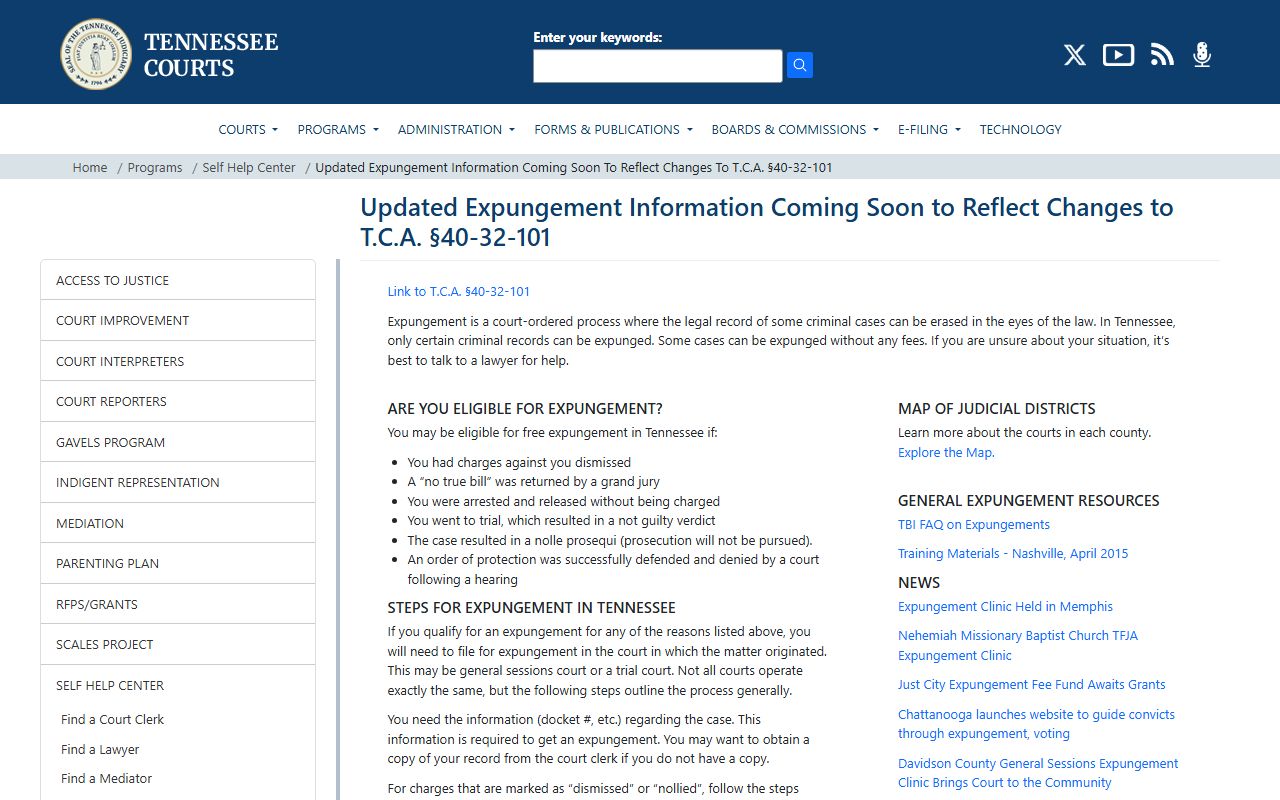
The Tennessee AOC expungement page explains the court-ordered process and links to the governing statute.
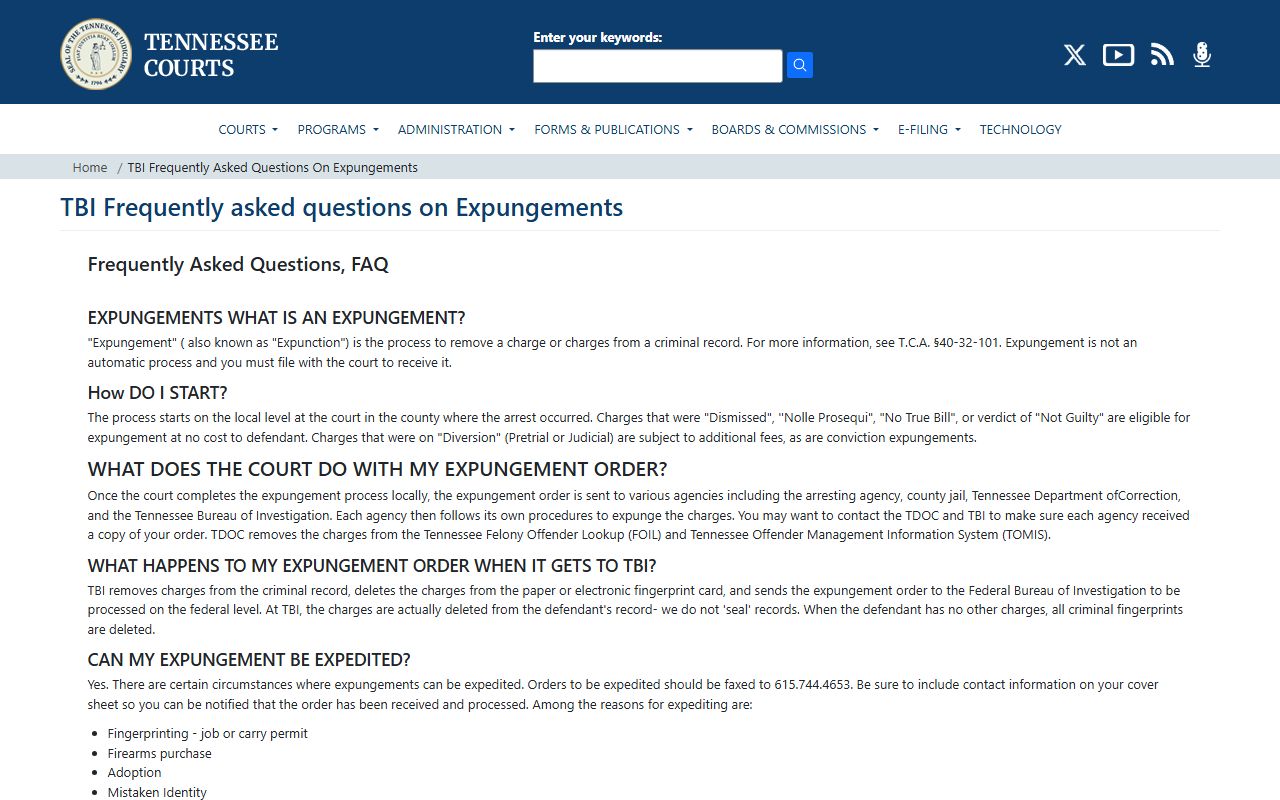
The TBI and AOC expungement FAQ describes local filing and how an order is sent to agencies.
For probate itself, the better assumption is that most filings are open and a few are protected. If you need a sensitive part of a guardianship or conservatorship file, expect to show that you are a party or have a legal interest, and expect the court to weigh privacy. When a record is withheld, the office should explain the order or rule that applies, just as it would for any other court file.
Historical Probate and Court Records
Older estate and chancery matters may not be in any online system. The Tennessee State Library and Archives holds copies of court minutes for circuit, chancery, and county courts, and it can search indexed minutes for a fee over a five-year span. For a decades-old will or estate, the archives can be a better starting point than the current clerk's office.
The state archives explains how to find older court records.
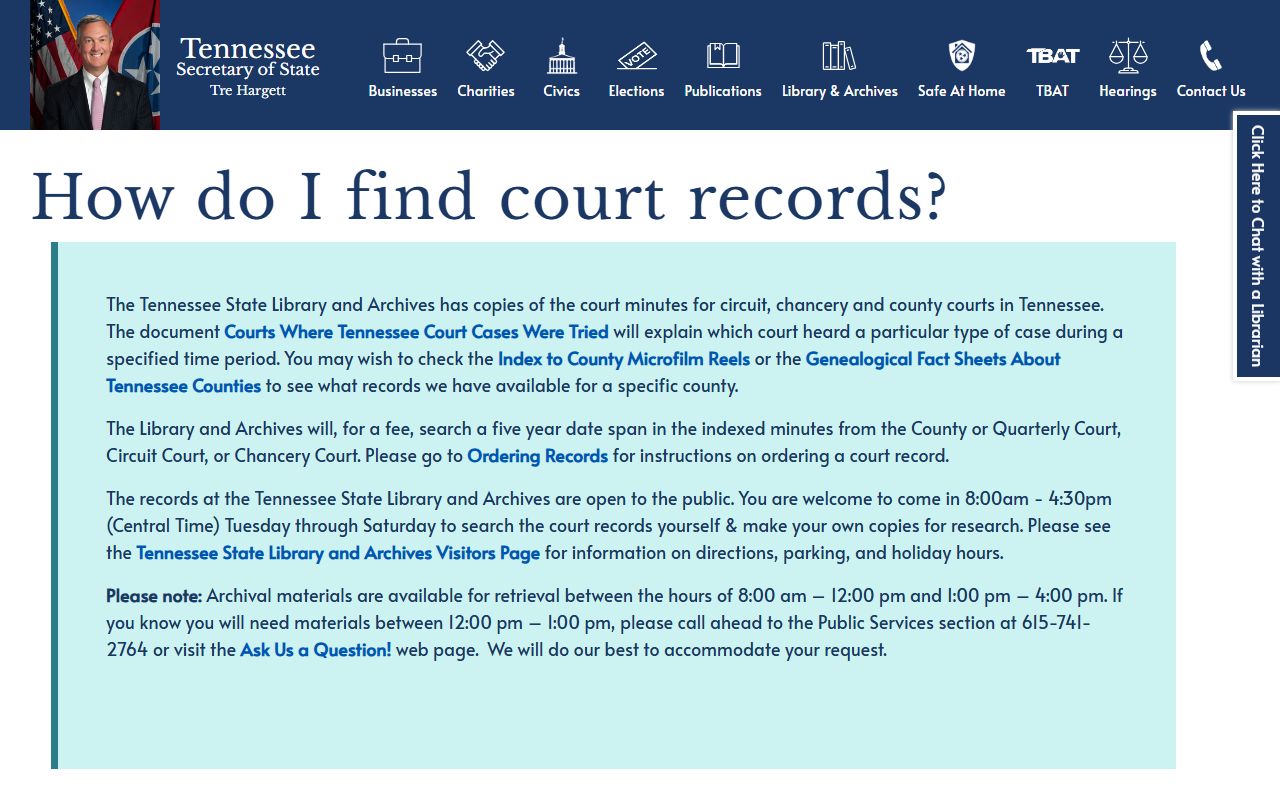
The Tennessee State Library and Archives FAQ covers court-record access and historical court minutes.