
The Tennessee Public Records Act
The Tennessee Public Records Act, Tenn. Code Ann. section 10-7-503, gives citizens the right to inspect records held by government agencies, with certain exceptions in section 10-7-504. Court records are a special case. They are governed more directly by a Supreme Court rule that defines what part of a court file is open.
So Knox County records split into two tracks. General county records, such as deeds and county clerk filings, fall under the Public Records Act. Court case files fall under the court-access rule. Most public records are open to any requester, but the law lists categories that are confidential, and the agency that holds a record decides whether it can be released.
For court records specifically, the Tennessee courts publish the governing rule online.
The Tennessee Supreme Court Rule 34 sets the public right to inspect court records unless a law, rule, or order makes them confidential.
What Records County Offices Maintain
Different Knox County offices hold different records. The Register of Deeds records real-property documents. The County Clerk issues marriage licenses and handles county services. The court clerks keep case files. The Sheriff keeps custody and arrest data. Matching the record to the office is the first step in any request.
- Deeds and liens - recorded by the Register of Deeds.
- Marriage licenses - issued by the County Clerk.
- Court case files - held by the Criminal, Circuit, and Chancery clerks.
- Jail and arrest data - published by the Sheriff's Office.
The Register of Deeds explains that all of its records are public except military discharges.

The Knox County Register of Deeds records deeds, deeds of trust, releases, liens, and similar documents, and it offers a free fraud-alert notification system.
The County Clerk, a separate office, handles a long list of county services beyond marriage licenses. Those include motor vehicle titling and registration, business tax licenses, notary commissions, and passport processing. People often mix up the County Clerk with the court clerks, but the County Clerk does not hold court case files. Knowing this saves a wasted trip, since a person looking for a divorce or a criminal case will not find it at the County Clerk's counter.
How to File a Public Records Request in Knox County
A request goes faster when it is aimed at the right office and describes the records clearly. There is no single county inbox for every record.
- Identify the office that holds the record, such as the Register, a court clerk, or the Sheriff.
- Describe the records you want, with names, dates, or a case number.
- Submit the request by the office's accepted method.
- Wait for the office to respond under the Public Records Act.
- Pay any reasonable copy fee and receive the records.
Some records are not handled by a written request at all. Jail custody status, for example, is published on the Sheriff's live roster and pages.
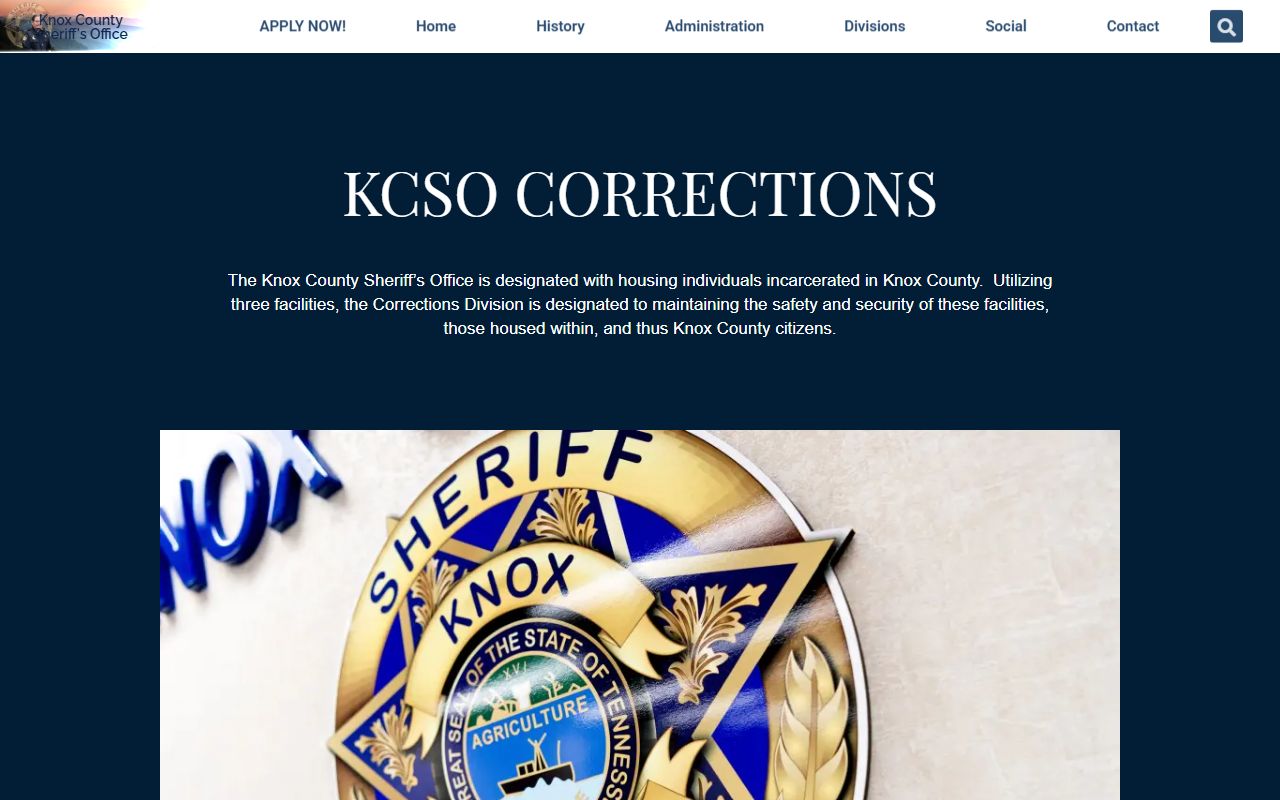
The Sheriff Corrections Division page posts inmate, visitation, and facility information directly, so custody questions often do not need a formal request.
Public Records Request Details
Whether an office uses a form or a letter, the same basic details speed up the response. The table shows what to include.
| Field | Required | Notes |
|---|---|---|
| Requester Name | Yes | Tennessee residency may be asked for some requests. |
| Description of Records | Yes | Be specific; names, dates, and case numbers help. |
| Date Range | No | Narrows the search. |
| Format Preference | No | Paper, certified, or electronic if available. |
Response Timelines
Under the Public Records Act, a records custodian must respond promptly. The office can produce the records, deny the request with a reason, or tell you when the records will be available if they cannot be produced right away. If a request is denied, the law allows the requester to seek review. The exact handling varies by office, so it helps to keep a copy of your request and any response.
Public Records Fees in Knox County
Fees depend on the office and the record. The Public Records Act allows reasonable copy charges, and court records carry their own clerk fees. The table shows examples of specific record fees alongside the general rule for copies.
| Item | Amount |
|---|---|
| Certified marriage copy (County Clerk) | $5.50 in person / $9.02 online |
| Local criminal background package | $15.00 |
| Court certified copies | Set by court clerk schedule |
| General copy charge | Reasonable per-page fee set by the office |
Note: court filing fees for Circuit, Civil Sessions, and Chancery changed on January 1, 2026 under Tenn. Code Ann. section 8-21-401.
Records That Are Exempt
Not every record is public. Juvenile records are private with few exceptions. Adoption records are confidential and run through the Department of Children's Services. Sealed and expunged records, files under a protective order, and a court's internal deliberative materials are excluded under Rule 34. Driver records are limited by the federal Driver Privacy Protection Act, and military discharge records at the Register of Deeds are confidential. When an office withholds a record, it should point to the law that applies.
Confidentiality is not one single rule. It comes from several sources at once: the exceptions in the Public Records Act, juvenile and adoption statutes, sealed and protective orders, expunction orders, and privacy laws like the federal driver-privacy act. So the right question is not whether records are public in general, but whether this specific record falls into one of those protected categories. The office that holds the record makes that call and should cite the basis for any denial.
If Your Request Is Denied
A denial is not always the end. The office should give a reason tied to a statute or rule. If you believe a record was wrongly withheld, you can ask the office to reconsider, raise the issue with the relevant oversight channel, or seek review through the courts. For court records, Rule 34 and the clerk that holds the file are the right starting points. For broader county records, the Public Records Act is the governing law, and keeping written records of your request helps if you need to follow up.
It also helps to narrow a request that was denied as too broad. A custodian can refuse a vague, sweeping request, but a tighter ask, limited by names, a date range, or a record type, is harder to turn down. If the issue is a fee, ask for an itemized estimate before the office begins, so you are not surprised by a charge. Patience and specificity resolve most public-records disputes without a court fight.