
How to Look Up Knox County Jail Population Data
The official real-time source is the Sheriff's inmate population list. It is alphabetized, has A through Z filters, and offers a first and last name search. The page is better understood as a live custody list than a statistical dashboard. It updates as people are booked and released, so the count it implies changes through the day.
What the page does not show matters just as much. It does not publish a single population number, a demographic breakdown, a daily trend line, a pretrial and sentenced split, or a capacity ratio in its visible text. So the roster answers "who is in custody now" far better than it answers "how many and what share." For aggregate figures, the official local page is limited, and broader context comes from national reporting bodies.
To estimate a current count from the roster, you would page through the A to Z list and tally entries, which is rough at best because the list changes through the day. The Sheriff's Office also attaches a disclaimer that its data is provided for convenience and safety and should not be relied on for legal action. For an official count or trend, the better step is to ask the Sheriff's Office directly rather than infer a number from the live page.
Knox County Jail Capacity Overview
The Sheriff's Corrections Division runs three facilities. The Roger D. Wilson Detention Facility on Maloneyville Road is the main detention site. The Knox County Jail function is downtown, and the Work Release Center is also on Maloneyville Road. The Sheriff's current pages do not publish a rated capacity for each facility, so the table marks those figures as not published rather than guess at them.
| Facility | Rated Capacity | Role |
|---|---|---|
| Roger D. Wilson Detention Facility | Not published | Main detention, mail, visitation |
| Knox County Jail | Not published | Downtown jail function |
| Knox County Work Release Center | Not published | Work release housing |
Note: do not treat any single audit snapshot as a current capacity, since the Sheriff does not post a live capacity figure.
Average Daily Population
An average daily population, or ADP, is the typical number of people held over a period. The Sheriff's public pages do not post a current ADP or a year-over-year figure for the Knox County jail. National corrections research has referenced county ADP numbers in the past, but those snapshots are not the same as a current official count, and they should not be presented as today's population. The honest answer is that the live roster is the only official, current local source, and it shows individuals rather than a total.
ADP matters because it smooths out the daily swings. A jail can book and release dozens of people in a single day, so any one snapshot is noisy. A reliable ADP would come from the Sheriff's own records over a month or a year, which is why a direct request to the office, or a published corrections report, is the right source rather than a count taken off the live page on a single afternoon.
Population Composition
The roster does not publish demographic percentages, but a review of its entries shows what kinds of holds it mixes. Rather than invent figures, the table groups the categories that appear on the public list so you can see how varied the population is.
| Category | What It Includes |
|---|---|
| Local pretrial | People awaiting hearings on county charges. |
| Sentenced | People held on a mittimus or commitment order. |
| Probation violations | VOP holds tied to a prior case. |
| Other-agency holds | Holds for another Tennessee law enforcement agency. |
| Federal and immigration | U.S. Marshal inmates, ICE holds, immigration detainees. |
Because the federal and immigration holds are physically in the county jail, they show on the local roster even though their cases are not county cases.
Pretrial vs. Sentenced Population
Many people in a county jail are pretrial, meaning they are held while a case is pending rather than serving a sentence. The Knox County roster does not publish a pretrial-versus-sentenced percentage, so the split here is described, not quantified. The Document Type field is the clue: a jail mittimus or bound-over mittimus points to a sentenced or committed status, while a warrant or a 48-hour bond hearing event points to a pretrial stage.
| Status | How It Appears on the Roster |
|---|---|
| Pretrial | Warrant holds, bond hearings, preliminary hearing events. |
| Sentenced or committed | Jail mittimus, bound-over mittimus, revocation holds. |
Misdemeanor vs. Felony Population
The roster's Division field separates felony, misdemeanor, and DUI matters, along with the numbered Criminal Court divisions. That tells you the level of a charge for a given person, but the Sheriff does not roll those entries up into a published misdemeanor-versus-felony share. To gauge the mix, you would read the Division and Charge fields across the live list rather than read a single summary number.
Mental Health and Medical Population
Jails hold many people with mental health and medical needs, and Knox County addresses this partly through its courts. The county runs a certified Adult Mental Health Court and a Recovery Court, which divert eligible defendants into treatment-focused dockets. The Sheriff's pages do not publish a count of inmates receiving mental health or medical care, so this is described as a known need served by programs rather than a reported statistic.
National and State Context
For numbers the Sheriff does not publish, national bodies fill the gap. The Bureau of Justice Statistics produces annual jail reports, and the Vera Institute maintains a county-level jail tool. These sources report jail population per 100,000 residents at the national and state level. Knox County does not post a comparable local rate, so any county-to-state-to-national comparison should rely on those official reports and be clearly labeled as national or state context, not a Knox County figure.
Federal custody is tracked separately again. The Bureau of Prisons locator covers federal inmates nationwide.
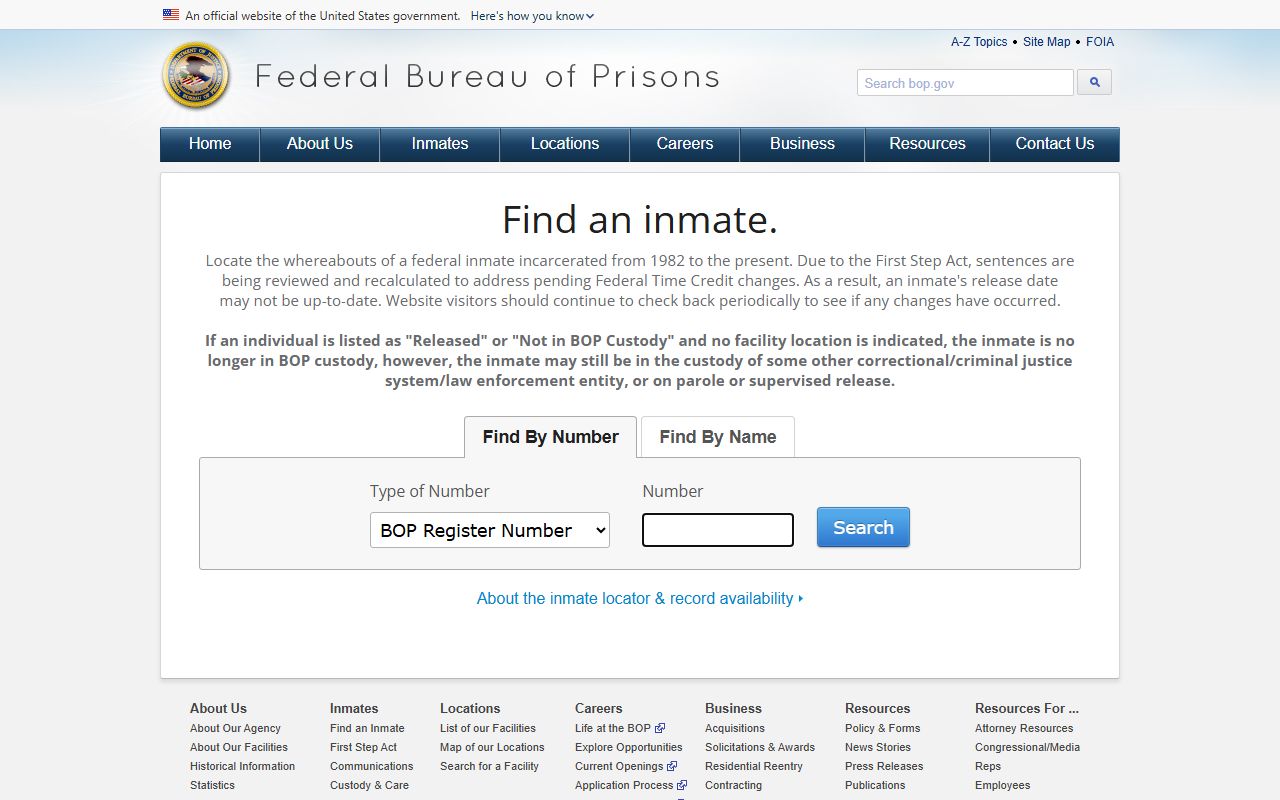
The Bureau of Prisons locator is the right tool for anyone whose Knox County case became a federal matter.
Population Trends Over Time
A multi-year trend needs a published historical series, and the Sheriff's pages do not post one. Without an official Knox County trend table, the responsible approach is to point to national reporting for direction and to treat the live roster as a present-day snapshot. Federal court records, which sit outside the county system entirely, are tracked through PACER.

The PACER system is the federal records source, useful when a Knox County matter crosses into the federal courts.
Searching for Knox County Inmate Records by Name
This page covers aggregate jail population data, not individual lookups. To search the live jail roster by name, use the Knox County inmate records page, which explains the roster fields and the search form. Population data and a name search answer different questions.
Where the Data Comes From
The current Knox County jail population data comes from the Sheriff's Office live roster. Broader figures, such as jail population per 100,000 residents, come from the Bureau of Justice Statistics and the Vera Institute. Federal records are kept in PACER and the Bureau of Prisons locator. For bankruptcy and other federal filings tied to the Eastern District of Tennessee, the PACER court lookup names the right division.
Keeping the sources straight prevents common mistakes. A person held in the Knox County jail is in the Sheriff's roster, a person sentenced to state prison is in the Tennessee Department of Correction system, and a person in federal custody is in the Bureau of Prisons. Each agency counts only its own population. So a complete picture of where Knox County defendants end up is spread across county, state, and federal systems, and no single page adds them together.
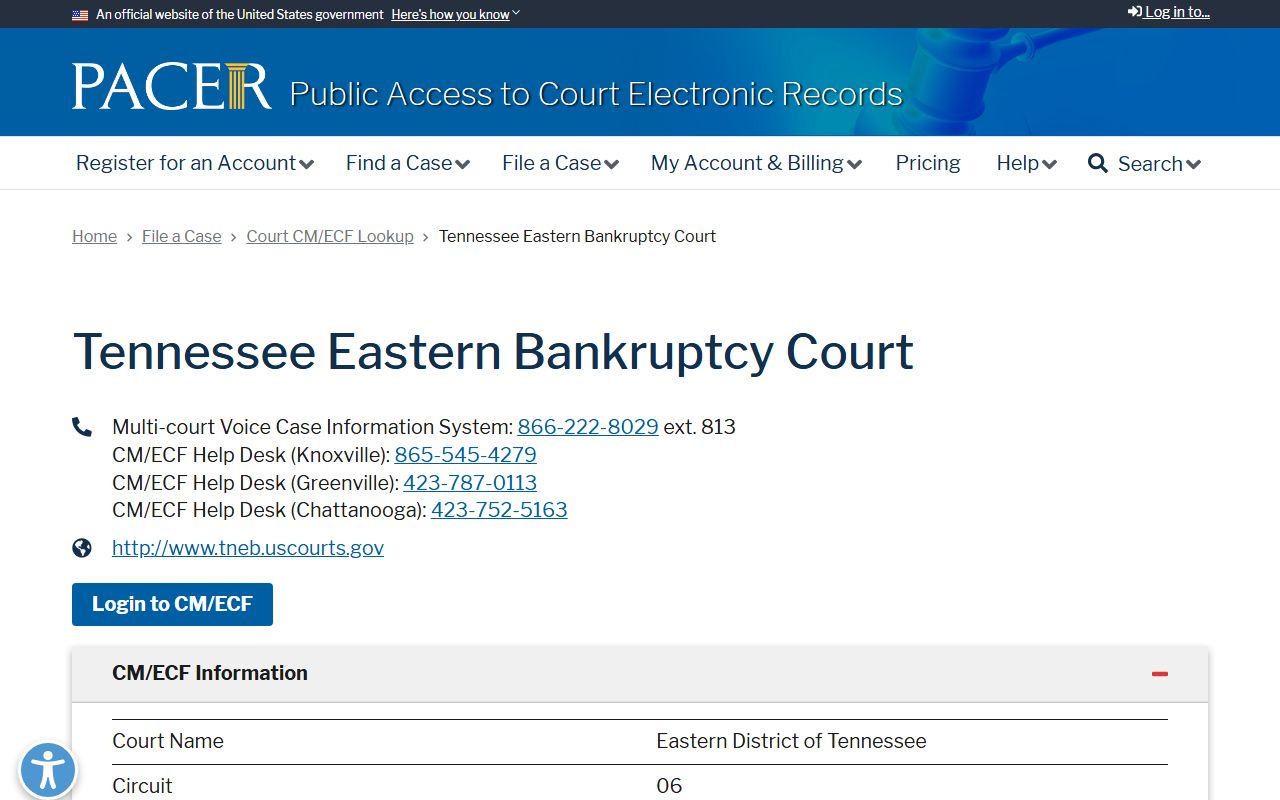
The PACER court lookup for the Eastern District of Tennessee shows the Knoxville federal court address and division.